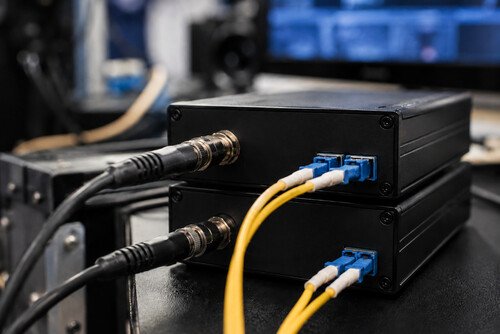
In modern broadcast, live production, and professional audiovisual installations, reliable signal transmission is essential. As video resolutions increase and production environments become more complex, traditional copper cabling may no longer provide the distance, stability, or flexibility required for demanding applications. This is where SDI fiber optic extenders become particularly valuable. By converting SDI signals into optical data, these devices make it possible to transmit high-quality, uncompressed video over significantly longer distances without sacrificing signal integrity. They are widely used in television studios, sports venues, conference centers, control rooms, and outdoor production environments. In addition to extending transmission range, fiber optic technology provides strong protection against electromagnetic interference and electrical disturbances. As a result, SDI fiber optic extenders offer a dependable solution for professionals who need consistent video quality, low latency, and secure signal delivery across large facilities or challenging technical environments.
Professional video systems often need to transport signals across distances that exceed the practical limits of copper cabling. In studios, stadiums, and large venues, signal integrity is critical. SDI fiber optic extenders solve this challenge by converting Serial Digital Interface signals into optical data, transmitting that data through fiber, and restoring it at the destination. This approach supports long cable runs and protects signal quality where coaxial connections may otherwise become unreliable.
An SDI fiber optic extender system consists of a transmitter, a receiver, and fiber cables. The transmitter accepts an SDI video signal from a camera, switcher, or recorder. It converts the electrical signal into light for transmission through optical fiber. At the destination, the receiver restores an electrical SDI signal for a monitor, router, or recorder. The extender may also carry embedded audio, timecode, and control data.
The main advantage of fiber is distance. Copper coaxial cables can carry SDI signals effectively, but their usable range decreases as signal bandwidth increases. Higher resolution and higher frame rate formats require more data, which makes them more sensitive to attenuation and cable quality. Fiber optic links can transport these signals over hundreds of meters or several kilometers without the same level of signal degradation.
Signal quality is another important benefit. Fiber is immune to electromagnetic interference, radio frequency interference, and ground loop problems. These issues can affect copper connections when cables run near power equipment, lighting systems, motors, wireless transmitters, or heavy electrical infrastructure. Because optical fiber carries light instead of electricity, it provides electrical isolation between connected devices. This isolation can improve reliability and reduce the risk of damage caused by voltage differences, surges, or accidental grounding problems.
Modern SDI extenders may support several video standards, including standard definition, high definition, 3G, 6G, and 12G SDI. The required standard depends on resolution, frame rate, color depth, and production workflow. For example, lower bandwidth links may be sufficient for traditional high definition video, while ultra high definition formats may require 6G or 12G capability. Buyers should verify that both the transmitter and receiver support the exact signal format used in the system. Compatibility should never be assumed solely from the connector type.
Fiber type is another key consideration. Single mode fiber is commonly selected for very long distances because it uses a narrow light path and experiences relatively low attenuation. Multimode fiber is often used for shorter links within buildings, studios, or data facilities. The connector format must also match the existing infrastructure. Common optical connectors are compact, secure, and designed for repeated use, but cleanliness is essential. Dust, oil, or scratches on a fiber end face can increase signal loss and cause intermittent operation.
Some SDI fiber optic extenders use one fiber for one direction, while others support bidirectional communication over a single strand. Bidirectional designs can reduce cable requirements and simplify deployment, especially when return video or control signals are needed. More advanced systems may transport multiple SDI channels over one or two fibers through optical multiplexing. This can be valuable in productions with several cameras, monitoring feeds, or isolated technical areas. However, increased channel density can also make configuration, testing, and troubleshooting more complex.
Power arrangements vary between extender systems. Some units use local power supplies at both ends. Others can receive power through specialized infrastructure or integrate with rack mounted frames. Portable converters may be designed for field use, while modular cards may suit permanent control rooms. The best form factor depends on the application. A compact unit is useful near a camera or display, whereas a rack based solution may provide better organization, redundancy, monitoring, and service access in a central equipment room.
Reliability features deserve careful attention. Reclocking helps restore signal timing and reduce accumulated jitter before the SDI output is delivered. Status indicators can show power, optical link condition, and input signal lock. Some systems provide diagnostic data, optical power measurements, alarm contacts, or remote monitoring. Redundant power inputs may be important in mission critical installations.
Installation quality has a direct effect on performance. Fiber cables should not be bent beyond their recommended radius, crushed under equipment, or pulled with excessive force. Connectors should be inspected and cleaned before use. Technicians should label both ends, document signal paths, and test optical loss when commissioning the system. Spare cables, cleaning tools, protective caps, and loopback accessories can reduce downtime during live production. When temporary cables cross public areas, protective ramps or overhead routing may be required.
Choosing an extender should begin with a clear list of technical requirements. Important factors include SDI standard, maximum distance, fiber type, connector type, number of channels, embedded audio support, return path needs, power options, and environmental conditions. Latency should also be reviewed, although many extenders add little or no noticeable delay because they transport the SDI stream directly rather than compressing it. Uncompressed transmission is especially valuable for live switching, camera shading, critical monitoring, and synchronized production.
It is also important to distinguish SDI fiber extenders from video over network systems. Network based solutions often compress video into packets and may offer flexible routing through standard data infrastructure. SDI fiber extenders usually preserve the original baseband signal and create a direct point to point optical connection. This simplicity can provide predictable timing, consistent quality, and easier integration with traditional broadcast equipment. The right choice depends on the scale, routing requirements, latency limits, and management preferences of the project.
As video resolutions and production demands continue to grow, fiber based transport is becoming increasingly important. SDI fiber optic extenders offer a practical bridge between established broadcast interfaces and modern optical infrastructure. They combine long distance capability, electrical isolation, strong resistance to interference, and support for high bandwidth video. With careful format selection, proper fiber handling, and thorough testing, they can deliver stable performance in both permanent installations and demanding live environments. For organizations that need reliable, uncompressed video over extended distances, these devices remain a dependable and versatile solution. For more information on this subject, please read Thor’s articles.

